
Electric vehicles depend on many small mechanical interfaces that rarely appear in a showroom photograph.
A housing must locate its internal parts, meet adjoining surfaces and remain compatible with the assembly process.
These requirements make the transition from an attractive CAD model to a practical component an engineering problem, not merely a machining task.
The IEA’s Global EV Outlook 2026 provides context for the continuing development of electric-vehicle markets.
For component teams, the immediate question is how to translate a particular design into repeatable manufacturing requirements.
Understand what the housing needs to do
Begin by identifying the surfaces that locate, support or connect other components.
A mounting face may establish position, while a pocket provides clearance and a hole permits fastening.
Those features should not automatically receive identical tolerances or finishing requirements.
The design owner should explain which interfaces are functionally important and which dimensions provide general shape.
Separate physical fit from electrical, sealing or thermal requirements that need their own specialist evaluation.
A component that fits an assembly is not automatically qualified for the operating environment.
Document these distinctions before discussing production methods.
Consider cutting-tool access early
A CAD system can represent an internal corner that a rotating milling cutter cannot produce in a single ordinary operation.
Deep pockets, narrow channels and features hidden behind other surfaces can also complicate tool access.
Review these details before the design is released rather than waiting for a manufacturing objection.
Protolabs’ CNC design fundamentals offers a useful introduction to design choices that affect machining.
Its supplier-specific recommendations are educational references, not universal limits for every machine shop.
Ask the selected manufacturer to review the actual geometry and explain any proposed changes.

Illustrative AI-generated manufacturing visual; not an Amarex facility.
Plan how the part will be held
Material must be secured during cutting without preventing access to the surfaces being machined.
A thin wall or delicate flange may need a different approach from a solid block.
The sequence matters because removing material changes the shape and stiffness of the remaining workpiece.
Identify suitable locating surfaces and discuss whether multiple setups are likely.
Consider how a later operation will reference features created earlier.
A thoughtful workholding discussion can reveal a practical improvement that is invisible in a static rendering.
Do not assume that a successful prototype automatically establishes a robust production fixture.
Specify the finished condition
Important dimensions need to be understood in relation to any subsequent finishing operation.
A coating, surface treatment or cleaning requirement can influence the condition of a mating surface.
State which features are assessed before treatment and which are accepted in the finished condition.
Define edge requirements where sharp edges or loose burrs could interfere with handling or assembly.
Use drawing-supported instructions rather than broad language such as perfect finish.
Packaging should protect those same features until the next operation takes place.
Connect sourcing with the drawing
When evaluating precision CNC machined automotive components, use published examples to begin a technical discussion about the part.
They do not establish that a supplier has approved an individual EV housing design.
Share the controlled drawing, material grade, quantity and relevant inspection requirements before requesting a production commitment.
Identify which assumptions need confirmation and keep the manufacturer’s response with the quotation.
This makes comparisons more useful than choosing solely from a headline price or equipment list.
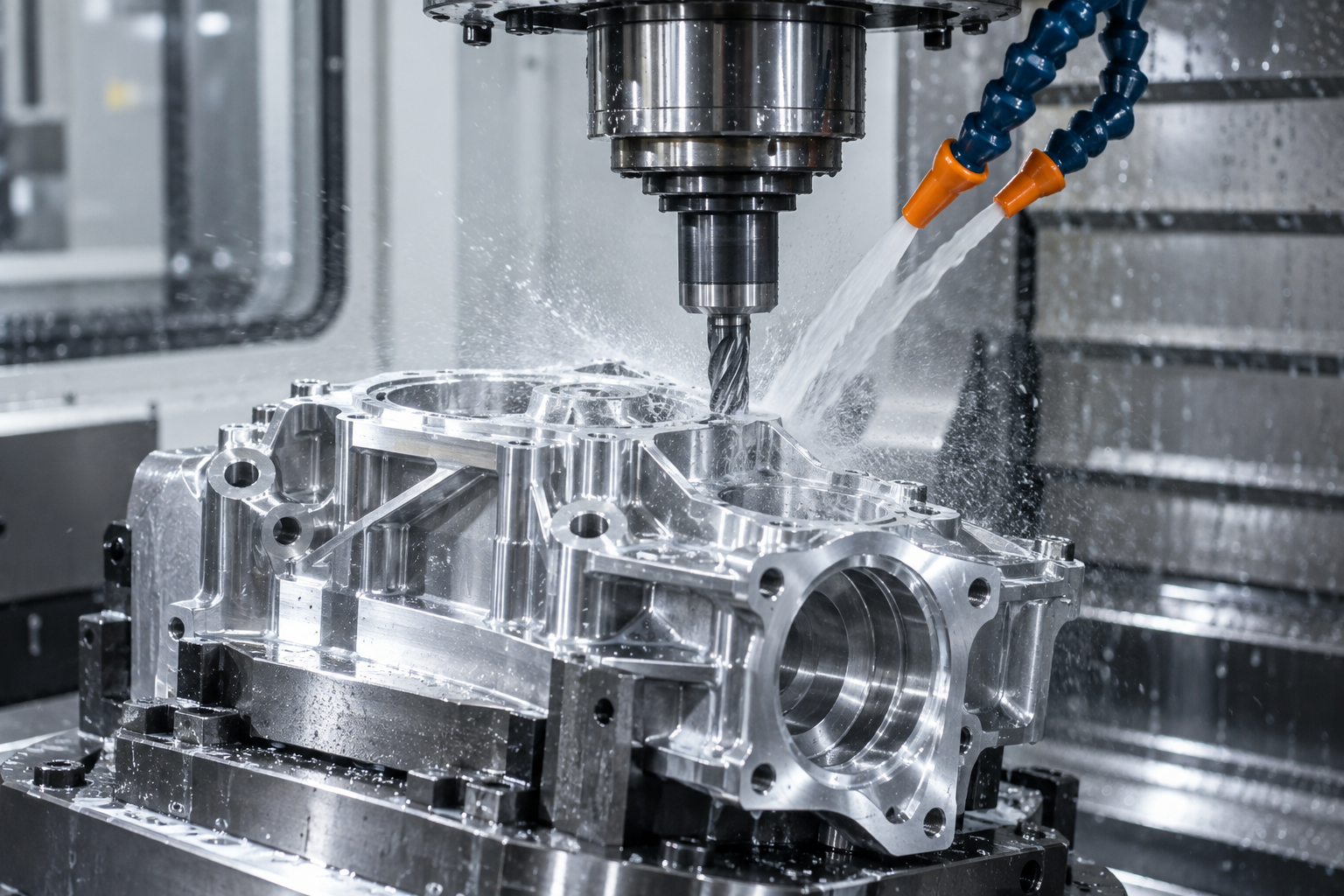
Illustrative AI-generated CNC housing image appears below; not an Amarex facility.
Review the whole assembly path
A housing’s value is determined partly by how reliably it enters the next stage of production.
Review orientation, fastening access and the order in which mating parts will be installed.
Include inspection, finishing and handling in the discussion rather than considering machining in isolation.
Changes should be assessed by the responsible engineering team and released through the appropriate approval process.
The strongest component design is one that people can manufacture, measure and assemble with a shared understanding of its requirements.
Disclosure: this topic-focused publication is managed by Amarex Marketing and includes an Amarex Machining resource.


Write a comment ...